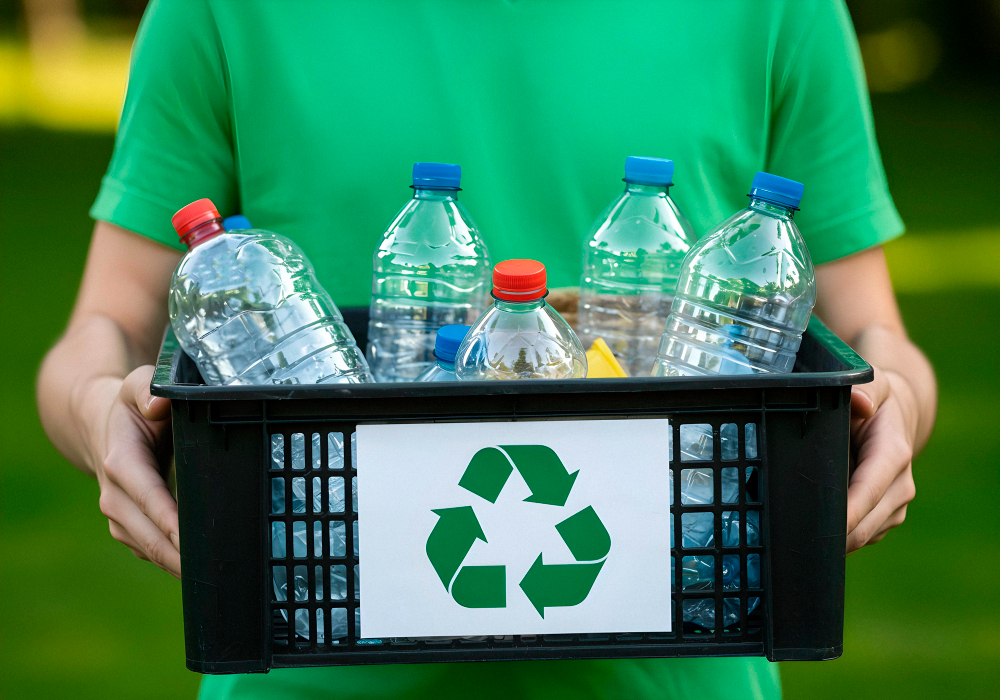
We have all seen the scenes in movies or heard stories about people collecting bags full of cans and bottles to cash them in for a nice payday. It sounds like a simple way to make some extra pocket money while helping the planet. But if you live in Trenton or the surrounding Mercer County area, you might have noticed that the process isn't quite the same as it is in other states.
So, is it possible to turn your plastic trash into treasure?
To understand if you can hit that $100 goal, we need to look at how recycling works differently here compared to "Bottle Bill" states, and what the real value of that plastic is.
To answer the question directly: If you lived in a state with a Container Deposit Law (often called a "Bottle Bill"), you would typically earn 5 to 10 cents per bottle.
If you're getting 5 cents per bottle, you would need to collect 2,000 bottles to make $100. If you're lucky enough to be in a state paying 10 cents, you would need 1,000 bottles.
However, New Jersey isn't currently a Bottle Bill state. This means you can't simply walk into a supermarket with a bag of empty soda bottles and feed them into a machine for instant cash tickets. In our area, the economics are based on the scrap market value of the plastic material itself, rather than a government-mandated deposit.
Since we don't have a deposit system for recycling in New Jersey, the value of plastic is determined by its weight and the current market demand for materials like PET (Polyethylene Terephthalate) and HDPE (High Density Polyethylene).
This market fluctuates wildly. For example, the value of baled PET plastic can range significantly based on oil prices and global demand. If a scrap center pays by the pound, the math changes drastically compared to the per-bottle rate.
Let's break down the numbers:
At 50 bottles per pound, that equals 100,000 bottles.
Why does this matter? It highlights why curbside and commercial recycling programs are so vital in our region. For the average resident in Somerset or Middlesex County, collecting 100,000 bottles isn't feasible. Instead, the focus here is on efficient waste management—keeping these materials out of landfills so they can be processed in bulk.
While making a quick buck on plastic bottles is tough for individuals in our area, other materials often hold steady value for businesses.
For commercial entities, cardboard recycling is often a much more effective way to manage costs and potentially generate revenue. Cardboard (OCC) is easier to bale, easier to weigh, and generally has a more established market than loose mixed plastics.
If your business in Burlington County or Eastern Pennsylvania generates a high volume of shipping boxes, separating that material is a smart financial move. It reduces your trash hauling costs (because dumpsters fill up slower) and, depending on the volume and market conditions, can become a revenue stream.
You might wonder why the value of recyclables changes so much. It comes down to the global supply chain.
When manufacturers need raw materials to make new products—like carpeting, fleece jackets, or new bottles—they buy recycled plastic pellets. According to recent market reports, the demand for recycled plastics is expected to grow by roughly 5% annually as companies try to meet sustainability goals. However, if the cost of "virgin" (new) plastic made from oil is cheaper than processing recycled plastic, the value of your empty bottles drops.
This volatility is why working with a reliable local partner is essential for recycling in New Jersey. We understand the local landscape and helping you navigate these shifts is what we do best.
Even if you'ren't putting cash directly into your wallet for every single bottle you toss in the bin, you're saving money in other ways.
When we recycle, we reduce the tipping fees associated with dumping trash at landfills. In New Jersey, landfill space is at a premium. By diverting tons of plastic and paper away from the dump, we keep municipal taxes and waste management fees lower than they would be otherwise.
Plus, there is the community impact. Whether you're driving past the historic landmarks in Trenton or enjoying the parks in Monmouth County, we all want to see clean streets free of litter. Participating in recycling in New Jersey ensures our neighborhoods stay beautiful for the next generation.
If you're a business owner or property manager, trying to make money from a few bags of bottles isn't the goal—efficient waste management is.
To get the most out of your recycling efforts:
While you might not get rich collecting water bottles from your neighbors, the collective effort of recycling saves energy, resources, and landfill space. That is a value that pays off for everyone in the Garden State.
Do you need a reliable partner to handle your commercial or industrial recycling needs? We are here to help. Contact All County Recycling at (609) 393-6445 today to discuss how we can streamline your waste management program.