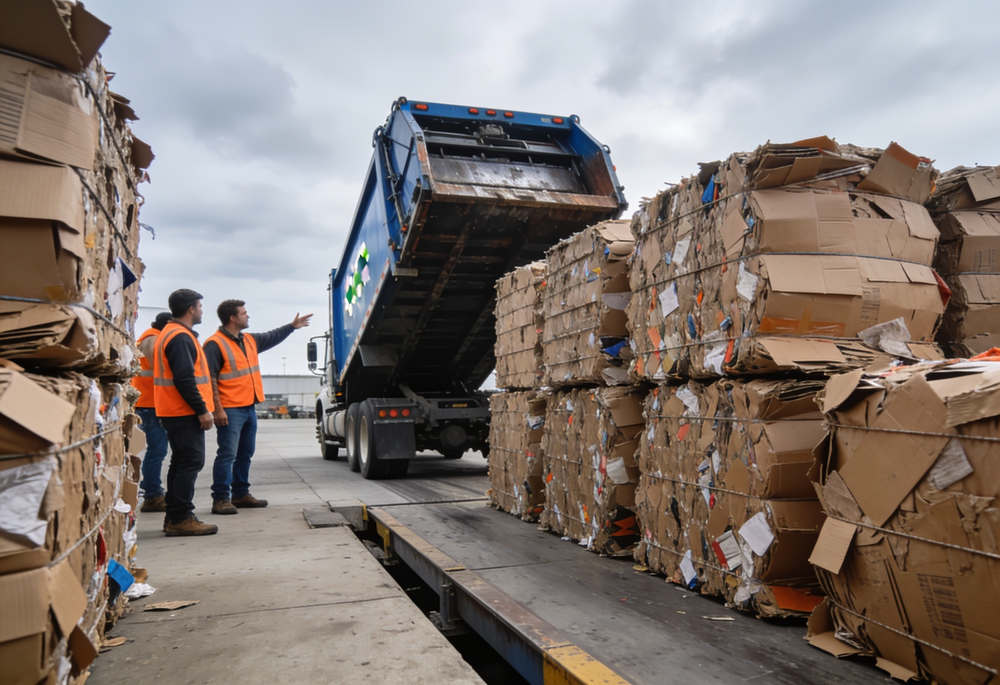
New Jersey has not yet enacted a statewide packaging EPR law in 2026, so Trenton businesses are not currently paying a new EPR surcharge tied to the weight of packaging they send to landfill. Still, proposed rules and the broader national shift toward producer responsibility make one move practical now: separate corrugated cardboard, document diversion, and keep it out of the trash. Near the New Jersey State House, that preparation can also reduce ordinary waste hauling costs.
To set up a commercial cardboard pickup before reporting expectations tighten, call All County Recycling at (609) 393-6445, or contact All County Recycling to discuss a recycling plan and compliance-ready records. Businesses around Downtown Trenton do not need to wait for a new mandate to start tracking what leaves their facilities.
Facilities near the Trenton Transit Center may receive a steady flow of boxes from deliveries, inventory, office supplies, and equipment. Once that corrugated material goes into a mixed trash container, the business pays to have recyclable material hauled away as waste and loses the chance to document diversion.
Extended Producer Responsibility, or EPR, shifts some responsibility for packaging waste from taxpayers and local governments to producers. Programs in states with active packaging EPR laws commonly require covered producers to report packaging data and pay fees influenced by factors such as material type, weight, and recyclability.
New Jersey's packaging EPR proposals remain under legislative consideration in 2026. That distinction matters. Businesses should not be told that a statewide packaging surcharge is already in force when it is not. At the same time, the policy direction is clear enough that producers, distributors, retailers, and facility managers have a reason to improve waste data now rather than reconstruct it later.
Corrugated cardboard can occupy a large amount of space in a commercial waste stream. Boxes pile up quickly, fill dumpsters, and may increase pickup frequency when employees toss them into general trash.
A dedicated cardboard recycling program changes that equation. Clean corrugated cardboard can be separated, flattened or baled when appropriate, and moved into a recycling stream instead of landfill-bound waste. Depending on volume, quality, market conditions, and handling arrangements, baled cardboard may have commodity value and can sometimes generate a rebate rather than simply creating a hauling expense.
The target keyword question, how to cut business cardboard recycling costs under NJ 2026 EPR rules, needs one correction: New Jersey does not yet have an enacted 2026 packaging EPR surcharge framework. The useful cost strategy is still straightforward. Keep recyclable cardboard out of landfill-bound trash, reduce unnecessary waste volume, and maintain proof of what was recycled.
If future New Jersey rules use packaging weight, recyclability, or disposal outcomes to influence fees, businesses with organized diversion records will be in a stronger position to understand their exposure. They will also have cleaner operational data for vendors, audits, internal sustainability goals, and customer reporting.
A recycling program is easier to defend when the paperwork matches the pickups. Businesses should keep records that show what material was collected, when it left the property, and how much was diverted when weight information is available.
Useful documentation can include pickup records, weight tickets, invoices, and certificates or diversion reports from a recycling partner. The exact records required by any future New Jersey EPR law will depend on the final legislation and implementing rules, so businesses should avoid claiming compliance with requirements that do not yet exist.
Still, organized records solve a practical problem today. A facility manager can compare waste volumes over time, spot contamination, explain changes in hauling frequency, and show management whether the program is working.
Cardboard recycling works best when the material stays clean and separate. Food residue, liquids, plastic film, foam, and mixed trash can reduce quality or create extra sorting work. Clear collection points and simple employee instructions help prevent that.
For businesses handling more than cardboard, a broader recycling plan can separate additional recoverable materials from the waste stream. The right setup depends on what the facility generates, available storage space, pickup frequency, and local market conditions.
The operational challenge is not just finding somewhere for old boxes to go. Businesses need reliable pickups and records they can retrieve later. That becomes more important when a facility has multiple departments, seasonal volume swings, or management asking for proof of diversion.
All County Recycling handles commercial cardboard and can provide the pickup and diversion documentation businesses need for internal tracking and preparation as New Jersey's packaging policy develops. Starting now creates a record trail before reporting pressure increases.
Call All County Recycling at (609) 393-6445, or schedule a commercial cardboard pickup with All County Recycling to build a cleaner waste stream and stronger documentation before New Jersey's packaging rules become more demanding.