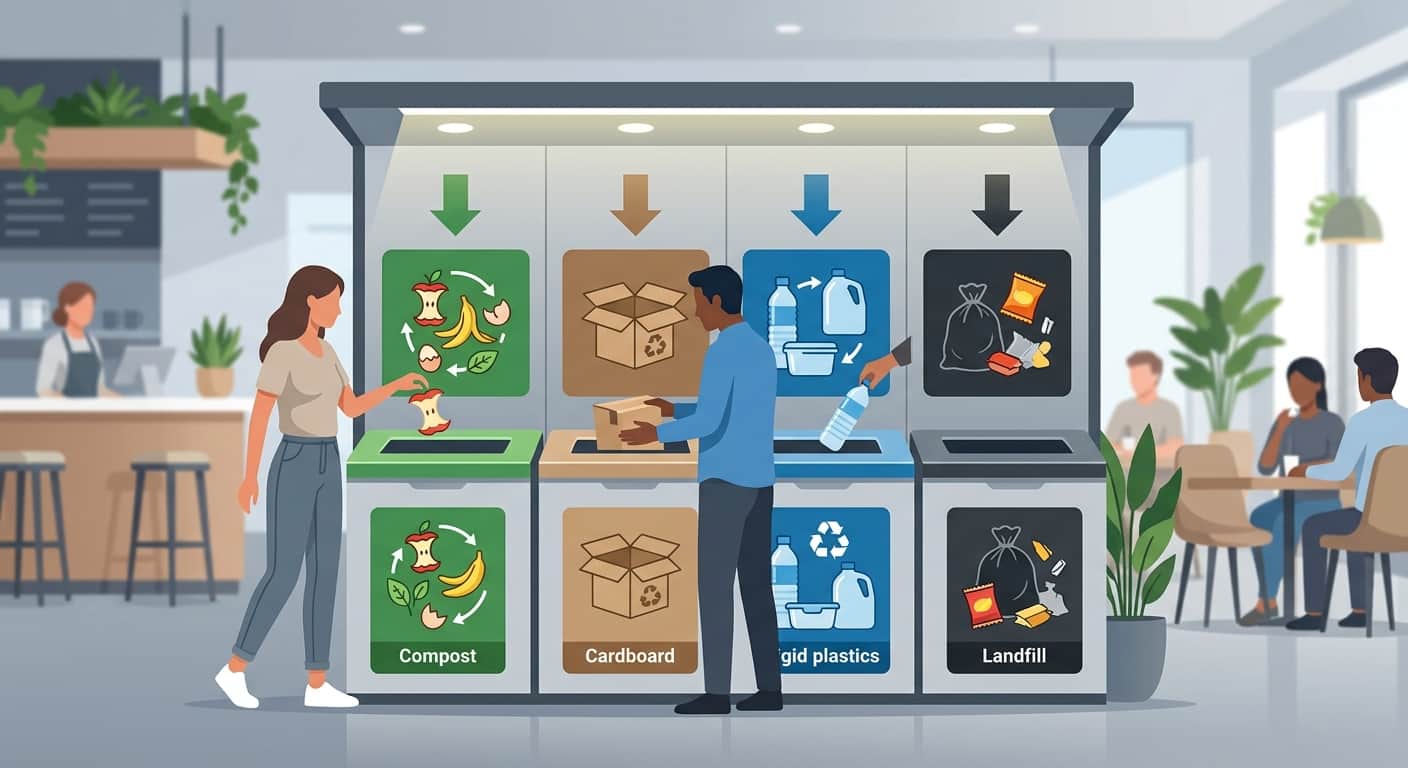
Wondering how to reduce waste at school in Trenton? Start by switching to reusable lunch containers, setting up dedicated bins for cardboard recycling, and going paperless in classrooms. Partnering with a local New Jersey recycling center can divert up to 60% of school waste from local landfills.
Every year, the average student generates about 67 pounds of lunch waste alone. That adds up incredibly fast across our local New Jersey districts. Figuring out how to reduce waste at school in Trenton requires a solid plan that involves students, teachers, and administrators. Need help setting up a waste diversion program right now? Contact All County Recycling at (609) 393-6445 to get started.
Schools produce massive amounts of paper, plastic, and food scraps daily. The good news is that managing this material does not have to be difficult. Simple changes in daily routines create a huge positive impact on our community. Let us look at the best ways to build a sustainable campus.
Trenton schools should focus on waste reduction to save money and protect local New Jersey ecosystems. Cutting paper and plastic waste reduces trash disposal costs by 20% to 30% annually. It also keeps harmful materials out of the Delaware River and teaches students lifelong environmental habits.
Financial savings remain a massive driver for local districts. When schools throw everything into a standard dumpster, they pay premium rates for trash hauling. Diverting materials into dedicated recycling streams slashes those monthly trash bills.
Beyond the budget, we have a responsibility to our local environment. Beautiful green spaces like Cadwalader Park remind us why keeping our city clean matters. When we teach kids to sort their trash properly, they carry those habits home to their families. This creates a ripple effect throughout the entire community.
Students can reduce daily waste by bringing reusable water bottles, using cloth lunch bags, and relying on digital devices for assignments. Switching from single-use plastics to durable goods prevents hundreds of pounds of trash per student over a standard 180-day school year.
In our years serving New Jersey, we've learned that simple changes make the biggest impact. Encourage parents to pack lunches in washable containers instead of plastic baggies. Schools can install water bottle refill stations in the hallways to eliminate the need for disposable plastic bottles.
Classrooms can also dramatically cut down on paper waste. Teachers can use digital portals for homework and parent communications. When printing is absolutely necessary, using double-sided printing cuts paper consumption exactly in half.
The best way to recycle cardboard at school is to set up dedicated collection bins near cafeterias and loading docks. Schools daily receive supply deliveries that create massive amounts of boxes. Flattening these boxes and using a professional service keeps them out of local dumpsters.
Cardboard is one of the most common recyclable items found on a campus. Food deliveries, new textbooks, and cleaning supplies all arrive in corrugated boxes. Without a proper system, these boxes take up huge amounts of space in regular trash bins.
Your district can partner with All County Recycling to handle this volume efficiently. We provide customized recycling programs tailored to your specific waste stream. By separating boxes from the regular trash, your maintenance staff saves time and the school saves money on hauling fees. In some cases, baling high volumes of cardboard can even generate revenue for the school district.
Schools can handle food waste by setting up a cafeteria composting program for fruit and vegetable scraps. Composting diverts up to 40% of standard lunchroom waste from landfills. This creates nutrient-rich soil that students can use in campus gardens or local community projects.
Food waste is heavy and expensive to throw away. Setting up a few clearly marked green bins in the cafeteria gives students a place to toss banana peels and apple cores. Staff can then transfer these scraps to an outdoor compost tumbler.
Within 60 to 90 days, those food scraps break down into fresh compost. Science teachers love this because it provides a hands-on biology lesson. Students can then use the soil to plant vegetables right on campus. Some schools even donate their surplus compost to local neighborhood initiatives in historic areas like Mill Hill or Chambersburg.
You get the community involved by forming student-led green teams and hosting local recycling drives. When parents, teachers, and local businesses work together, recycling rates jump significantly. Regular waste audits show students the direct results of their daily sorting efforts.
If you are trying to figure out how to reduce waste at school in Trenton, you cannot do it alone. Start a student environmental club to champion the cause. Kids are naturally enthusiastic about protecting the planet. They will gladly monitor cafeteria bins to ensure their peers sort items correctly.
You can also host collection events for hard-to-recycle items. Invite residents to drop off old electronics, batteries, or textiles on a Saturday morning. This brings the neighborhood together and positions your school as a leader in sustainability.
The bottom line is that effective school recycling programs require clear bins, consistent student education, and a reliable local hauling partner. Starting small with basic paper and plastic sorting builds the foundation for a massive waste reduction system over time.
Do not try to change everything overnight. Introduce one new concept at a time. Start with a strong paper recycling initiative in the classrooms. Once that runs smoothly, roll out a cardboard diversion plan for the loading docks.
Our team processes over 3000 tons of material each month right here in Trenton. We know exactly what it takes to build a successful program from the ground up. We are the local experts you trust with your business and your community.
Need to take the next step? Contact All County Recycling at (609) 393-6445 to schedule a free waste-stream analysis for your school today.