Have you ever stood in front of your recycling bin, holding a greasy pizza box or a plastic grocery bag, wondering if you should toss it in? You aren't alone. One of the biggest challenges we face at a recycling center New Jersey US residents rely on is "wish-cycling"—putting something in the bin hoping it's recyclable when it actually isn't.
While the intention is good, wish-cycling causes serious problems. It contaminates valuable materials, damages sorting equipment, and increases the cost of recycling for everyone. In Trenton and across Mercer County, contamination rates can reach 20-30% in some neighborhoods. That means nearly a third of what gets put in the bin might end up in the landfill anyway because it was mixed with garbage.
We want to help you get it right. By keeping the wrong items out, you help us process materials more efficiently and keep costs down. Here is what needs to stay out of your recycling bin.
Plastic bags and plastic film are the number one problem for recycling facilities. While they are technically made of plastic, they cannot go in your curbside bin or your standard commercial recycling container.
When plastic bags arrive at a facility like ours, they get tangled in the sorting gears. Imagine a vacuum cleaner trying to suck up a long ribbon; it wraps around the brush and stops the motor. That is what happens on a massive scale. We have to shut down operations—sometimes multiple times a day—so workers can safely cut the bags out of the machinery. This costs time and money.
What to do instead:
Most grocery stores in New Jersey and Eastern Pennsylvania have collection bins specifically for plastic bags. Take them there. They get processed separately and turned into items like composite decking.
Styrofoam (expanded polystyrene) is generally not accepted in standard recycling programs. This includes foam cups, take-out containers, and packing peanuts.
Styrofoam is problematic because it breaks apart easily into tiny static-charged beads. These beads stick to everything—paper, cardboard, and machinery—contaminating entire batches of good recyclables. Furthermore, Styrofoam is mostly air, making it incredibly expensive to transport relative to the amount of material you actually recover.
What to do instead:
Check if there is a specialized drop-off location near you, or, unfortunately, place it in the trash. Avoiding it when purchasing products is the best strategy.
This is a tricky one, but generally, the answer is no if the box is greasy or has cheese stuck to it.
Recycling paper and cardboard relies on mixing the material with water to create a slurry. Oil and grease from your pizza don't mix with water. The oil floats to the top and ruins the paper fibers, making it impossible to create new, high-quality paper products.
What to do instead:
Rip the box in half. If the top is clean, recycle it. Throw the greasy bottom half in the trash or compost it if you have a compost pile.
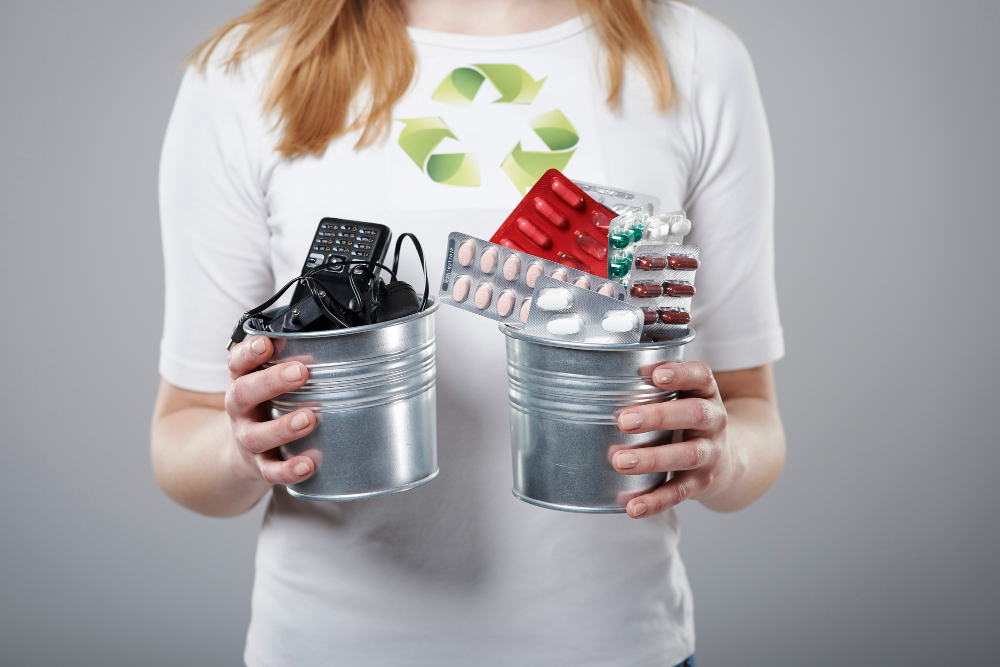
Never put electronics or batteries in your recycling bin. This includes old phones, rechargeable batteries, cords, and cables.
Lithium-ion batteries are a major fire hazard. When they get crushed in a recycling truck or at the facility, they can spark and ignite the surrounding paper and cardboard. We see fires in waste facilities every year caused by improper battery disposal. Cords and cables (often called "tanglers" in the industry) wrap around equipment just like plastic bags do.
What to do instead:
Take electronics to designated e-waste drop-off events in Mercer County or participating retail stores.
While glass jars and bottles are usually recyclable, other types of glass are not. This includes windowpanes, mirrors, Pyrex, and drinking glasses.
These materials melt at different temperatures than standard container glass. If a Pyrex dish gets mixed in with beer bottles, it creates defects in the new glass, causing it to crack or shatter.
What to do instead:
Wrap broken glass in newspaper for safety and place it in your regular trash.
Every region has slight variations in what they accept, but across New Jersey and Eastern Pennsylvania, we see similar contamination issues.
All containers must be empty and relatively clean. A peanut butter jar with a scoop of peanut butter left at the bottom can contaminate clean paper in the truck. You don't need to scrub it with soap, but give it a good rinse.
Beyond plastic bags, this category includes garden hoses, holiday lights, and clothing. None of these belongs in the recycling bin. They damage equipment and are difficult to remove.
Paint cans, motor oil containers, and pesticide bottles are hazardous. Even if they are empty, the residue is dangerous for our workers and the environment. Check the Mercer County Improvement Authority website for hazardous waste disposal days.
Recycling rules can change depending on whether you live in Trenton, Hamilton, or across the border in Pennsylvania. It typically costs between $75 and $150 per ton to process recyclables, but that cost spikes if the load is contaminated.
To ensure you're following the rules for your specific area:
Proper preparation makes a huge difference. Here is a simple checklist for residents in our service area:
When you recycle correctly, you aren't just following rules; you're helping the local economy and environment. Clean recyclables have market value. Contaminated ones cost taxpayers money to dispose of.
For example, a clean bale of cardboard is a commodity. A bale of cardboard mixed with Styrofoam and wet paper is trash. By taking a few extra seconds to sort properly, you help keep the recycling center New Jersey US businesses and residents use running smoothly.
If you're a business owner or property manager in neighborhoods like Mill Hill or near the Trenton Battle Monument, you might have larger volumes of waste. We can help assess your waste stream to see if you can save money by separating materials.
Recycling doesn't have to be confusing. If you're unsure about an item, the old adage "when in doubt, throw it out" is often the safest bet to avoid contamination. However, asking a pro is even better.
If you need a reliable partner to handle your waste and recycling needs, or if you have specific questions about what we accept at our facility, reach out to us. We have been serving this community for years and know the local landscape inside and out.
Contact All County Recycling or give us a call at (609) 393-6445. We are here to help you keep New Jersey clean and green.