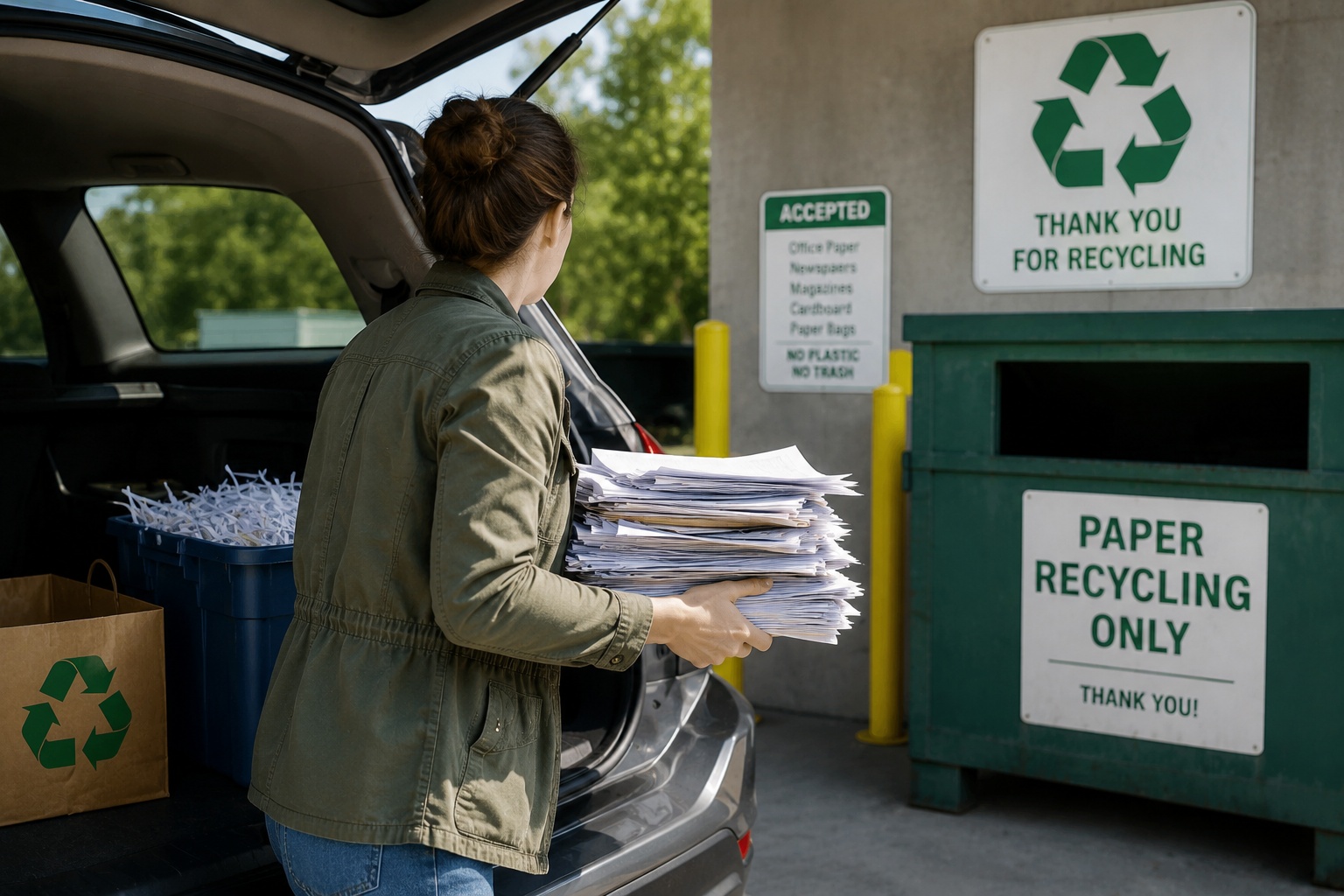
If you have boxes of old files, magazines, shredded documents, or other bulk paper, a dedicated recycling center is usually the most practical place to take it. Curbside bins fill quickly and may not be designed for a major home office purge, move, or estate cleanout. For residents around Trenton, a direct paper recycling drop-off in New Jersey can save repeated collection weeks and keep recyclable material out of the trash.
All County Recycling provides a straightforward option for residents who need to deal with more recyclable material than a household bin can reasonably handle. If you are clearing out a property in Hamilton Township and want to confirm what can be accepted before loading your vehicle, call (609) 393-6445 and contact the recycling team before your trip.
A bulk cleanout can produce far more paper than most people expect, especially when old records, mail, books, magazines, and shipping boxes have accumulated for years. Whether you are organizing a home near Princeton or helping empty a relative's property, separating recyclable paper before the trip makes the process faster and keeps useful material out of a landfill.
Curbside recycling works well for normal weekly household volume. A few newspapers, flattened shipping boxes, and regular mail can usually fit comfortably in the container provided by your municipality.
The situation changes when you are clearing an entire filing cabinet or packing years of paperwork into boxes. A home office purge can generate several bags or containers in a single afternoon. Moving also tends to uncover paper that has been stored in closets, basements, garages, and spare rooms.
Trying to fit all of that into a curbside bin can mean holding material for several collection cycles. Depending on local rules, oversized piles or extra containers may not be collected at all.
A direct drop-off lets you deal with the bulk load at once instead of letting it take over your garage or hallway.
Many common paper products from a residential cleanout can be suitable for recycling when they are kept reasonably clean and dry.
Typical loads may include:
If your cleanout includes a large number of boxes, cardboard recycling can help you handle those materials separately while still taking care of the rest of the paper generated by the project.
Acceptance requirements can vary based on material condition and how it is prepared. When you have an unusual item or a very large quantity, confirming before you arrive is the easiest way to avoid an unnecessary trip.
A landfill or general waste facility may seem like the obvious destination when you have a vehicle full of material. The problem is that recyclable paper does not necessarily belong in the waste stream.
Taking separated paper directly to a facility that handles recycling gives the material a chance to be processed rather than buried with household garbage. It can also make the trip simpler because you are going directly to a business that regularly handles recyclable materials.
For a resident doing the work personally, this can be preferable to paying a hauling company just to remove boxes and bags that are already sorted and ready to go.
You also keep control over the timing. Instead of scheduling a pickup window or leaving piles outside, you can prepare the load, confirm acceptance, and make the trip when it works for you.
A little preparation at home makes unloading easier and reduces the chance that recyclable paper becomes contaminated.
Start by keeping paper dry and separating obvious trash such as food waste, plastic packaging, or other nonpaper items. If you have confidential documents that have already been shredded, contain the shredded paper so loose pieces do not scatter during transportation.
Cardboard should be broken down and flattened. This reduces the amount of space it takes up in your vehicle and makes a large cleanout much easier to organize.
You do not need to turn the project into a complicated sorting exercise. The goal is to keep the load manageable, clean, and easy to identify when you arrive.
Recycling rules, accepted materials, and operating hours can change. Before loading dozens of boxes into your car, confirm that the facility can accept the type and amount of material you plan to bring.
Be ready to describe what you have. For example, tell the recycling center whether your load is primarily office paper, shredded documents, magazines, cardboard, or a mixture from a household cleanout.
This is especially useful after an estate cleanout or major move, when a load may contain several kinds of recyclable material at once. A short call can tell you whether anything needs to be separated differently before you leave home.
Bulk paper becomes frustrating when it sits around waiting for enough curbside collection days to disappear. Once you have sorted the recyclable material and prepared it for transport, taking it directly to a recycling center can turn a long cleanup into one manageable trip.
For help with a large paper load, call All County Recycling at and confirm drop-off hours and material acceptance before you arrive.